What We Eat in Yellowstone
I organize the food before the trip so that once we're in Yellowstone, food isn't running the trip.
Leah Cooper · September 15, 2026
8 minute read
There are a lot of ways to do food in Yellowstone. Restaurants, camp stoves, coolers, grocery runs, packed sandwiches, snacks shoved into seatback pockets.
We've done all of it.
But the system I'm about to explain is the one we've settled on after enough trips that I no longer want to think about food once we get there.
This isn't about fancy camp meals. It's about feeding six people, three meals a day, without me becoming the full-time trip caterer.
The goal is simple: decide what you're eating before you leave, prepare as much as you can at home, and build a cooler system that keeps the actual Yellowstone days feeling flexible.
First: I Make as Much Food at Home as I Can
I am not trying to cook elaborate meals on a camp stove after driving through Yellowstone all day.
I'm also not trying to figure out dinner at 7 p.m. while everyone is hungry and tired.
So before we leave, I make things that freeze well and reheat easily. Chili. Soup. Sausage gravy. Pre-cooked ground beef. Breakfast burritos. Pancake batter in a bottle.
Some of it goes into the cooler frozen. Some of it goes into the dry bin. Some of it becomes the first night's dinner so we don't have to think when we roll into camp.
The more I can front-load at home, the more the trip feels like a trip instead of a series of errands with a view.
“The more I can front-load at home, the more the trip feels like a trip instead of a series of errands with a view.”
Here's the Part Everyone Forgets: Two Coolers
You're probably actually going to want two coolers.
I know. You're already packing your family for Yellowstone and now I'm telling you to find room for another cooler.
But hear me out.
They serve two completely different purposes, and after trying to manage everything out of one cooler, this is one of those systems that actually makes camping easier.
One cooler stays at camp.
This is where most of my prepared food lives—the frozen soups, chili, steaks, eggs, sausage gravy, milk and meals we're saving for later in the trip.
Think of this one as your refrigerator.
The goal is to keep it cold, which means I'm not opening it every time someone wants a cheese stick.
Then there's the day cooler.
Every morning, I take what we're actually going to need that day and move it into this cooler.
Lunch. Drinks. Yogurt. Cheese. Fruit. Snacks. Our grab-and-go breakfast. Maybe even the ingredients for dinner if we know we're staying out through sunset.
This is the cooler that comes with us.
It's the one we're opening all day while driving through Yellowstone. It's the one we can take down to the river, carry to a picnic spot or pull from when somebody announces that they're starving even though they ate twenty minutes ago.
At the end of the day, we reset it.
One cooler is storage. One cooler is today.
And yes, two coolers take up more room. But I've found that they actually keep me far more organized.
I don't want to be overstimulated by food.
I don't want to dig through five days of meals looking for today's lunch. I don't want six people constantly opening the cooler that's supposed to keep tomorrow's dinner frozen. And I don't want to keep replacing ice because we've been opening the same cooler all day.
Separating the two solves that.
CAMP COOLER
Our refrigerator.
Stays cold.
Stores the bulk of our food.
DAY COOLER
Today's food.
Comes with us.
Gets opened all day.
RESET AT CAMP
Restock it for tomorrow.
The Coolers I Finally Landed On
I've tried so many different coolers.
Some are good. Some are better. Some are the best option for the amount you want to spend.
And then there's the YETI.
I know they're expensive. I didn't start here either.
But after years of camping with four kids, this is the combination I've landed on because the two coolers are doing two completely different jobs.
The YETI Hard Cooler: Camp
Our hard-sided YETI stays at camp.
This is the cooler I care about keeping cold. It's holding the food I've prepared for several days, so I don't want everyone opening it constantly.
This is basically our Yellowstone refrigerator.
It's also where my freezer-bag system comes in.
Whenever possible, I freeze prepared foods flat in freezer bags instead of packing everything in bulky containers.
Chili. Soup. Steaks. Eggs. Sausage gravy. Ground beef.
I can then organize the bags vertically inside the cooler almost like a filing cabinet.
I also freeze things we're going to consume anyway, like milk or orange juice. They're already part of our food plan, but while they're frozen they're also helping keep everything else cold.
The goal is to use as much of that cooler space for actual food as possible.
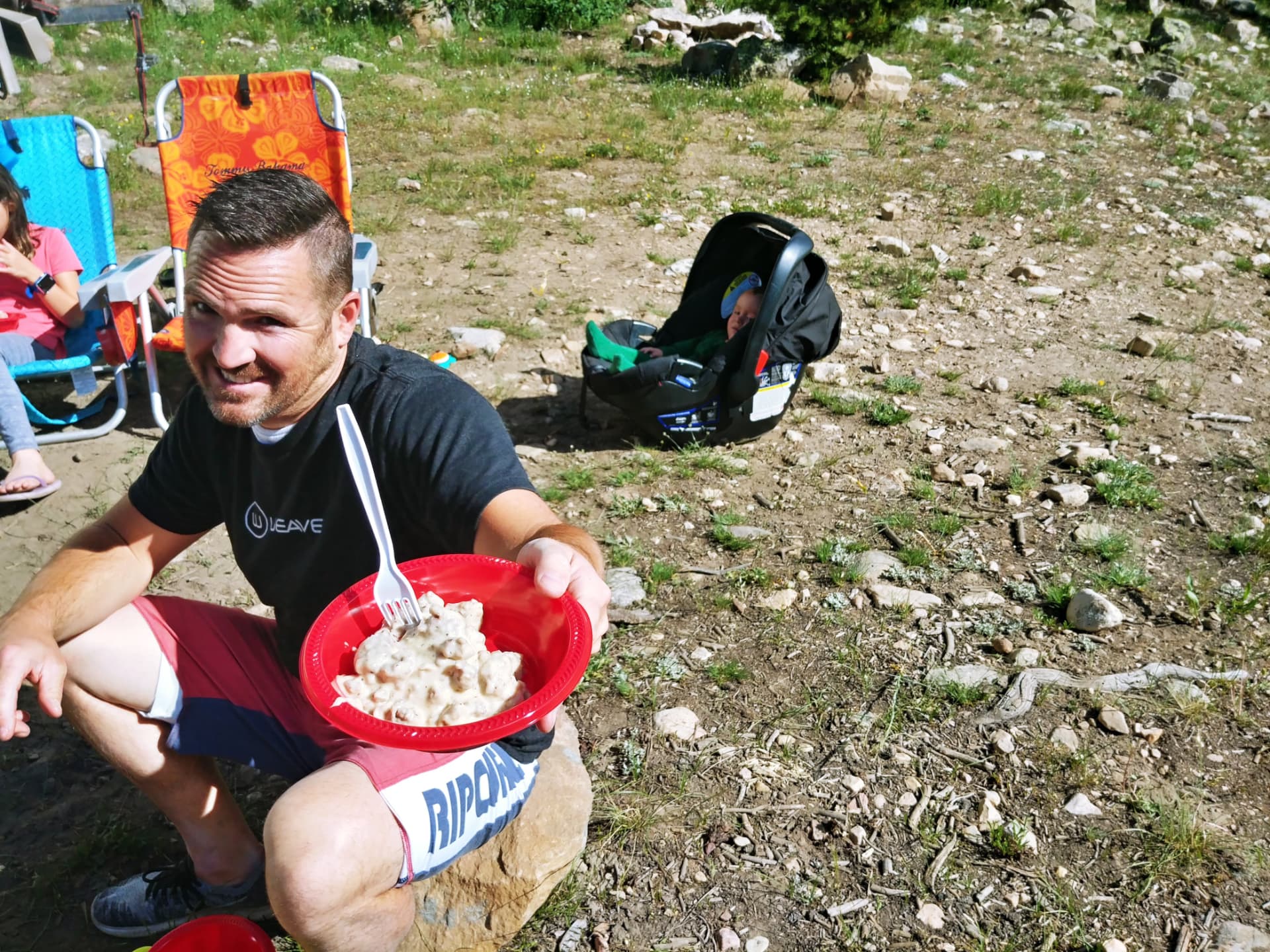
The YETI Backpack Cooler: The One That Comes With Us
The backpack cooler has a completely different job.
This is the workhorse.
It's flexible. I can carry it. It fits into the car more easily than hauling another hard-sided cooler around, and it goes wherever we're going that day.
In the morning, I load it from the camp cooler.
Then we go.
This is where the sandwiches, drinks, cheese, yogurt, fruit, breakfast, snacks and whatever else we need that day live.
If we're making dinner somewhere in the park, I'll load those ingredients too.
It's the cooler I'm perfectly fine opening 47 times because someone suddenly needs a cheese stick.
And because it's a backpack, if we find somewhere we want to wander farther from the car, we can actually bring it with us.
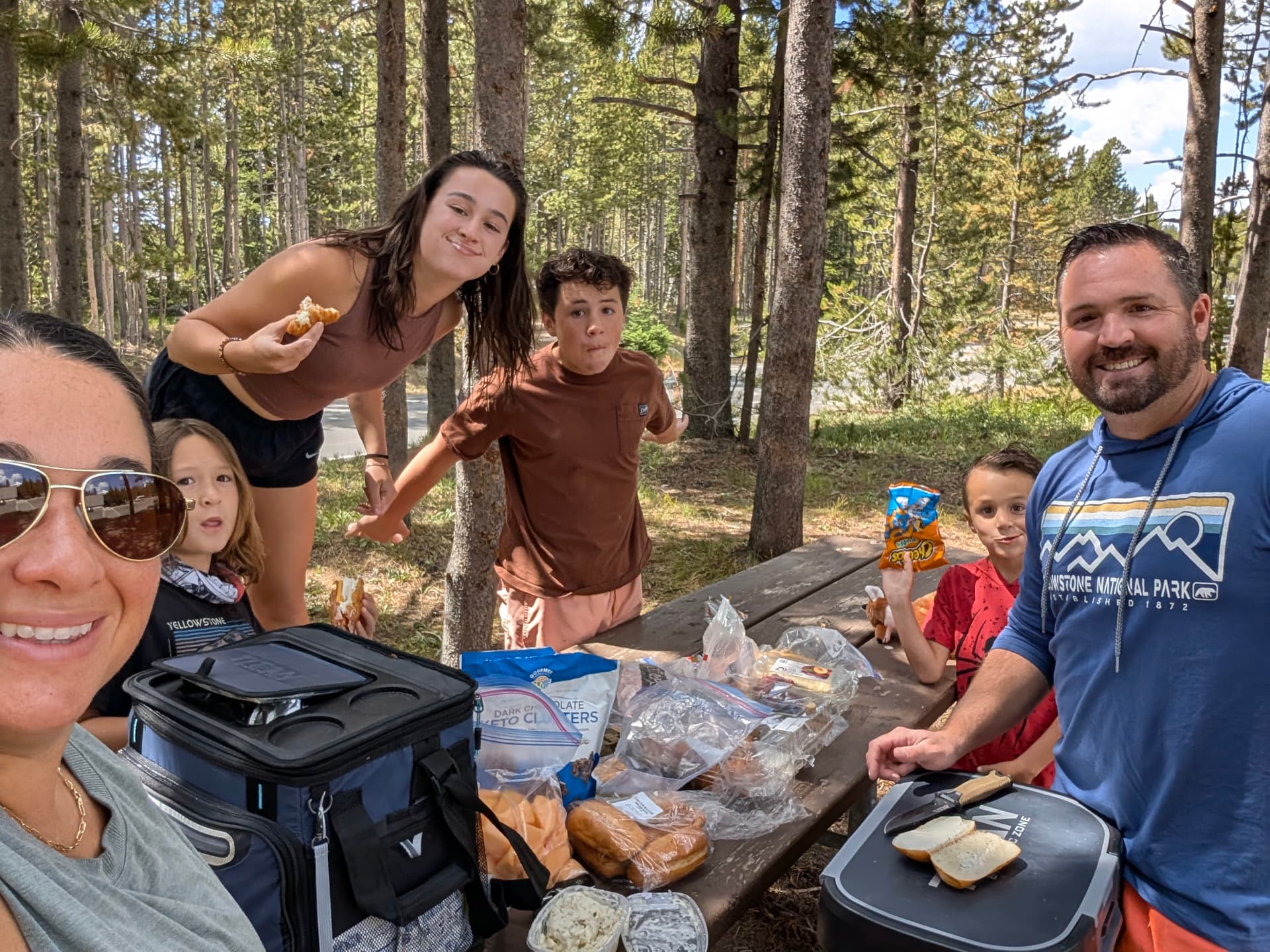
The Freezer-Bag Filing System
I want to say one more thing about how the camp cooler actually gets packed, because this is the part that makes the whole thing work.
Freezer bags, frozen flat, stacked vertically. That's it. That's the whole system.
When everything is flat, you can see it. When it's vertical, you can flip through it. When it's frozen, it stays cold and acts as its own ice pack.
I don't have to unstack containers or dig to the bottom of a cooler to find the chili. I just pull out the bag labeled “chili.”
The vertical filing system means the camp cooler stays organized for several days, which matters because nobody wants to reorganize a cooler in the dark while hungry kids stand nearby.
“The goal isn't necessarily to pack less. It's to pack in a way that makes sense once you're there.”
The cooler system isn't the point. The YETI isn't the point. Even the freezer-bag filing system isn't really the point.
The point is being able to stay beside the river when nobody is ready to leave. The point is making dinner without it feeling like a project. The point is not having to drive back to camp because someone is hungry and we have nothing with us.
You just want to be organized enough that when it happens, you can grab the right bag and keep going.
Keep planning Yellowstone
The rest of what we've figured out over more than ten trips.
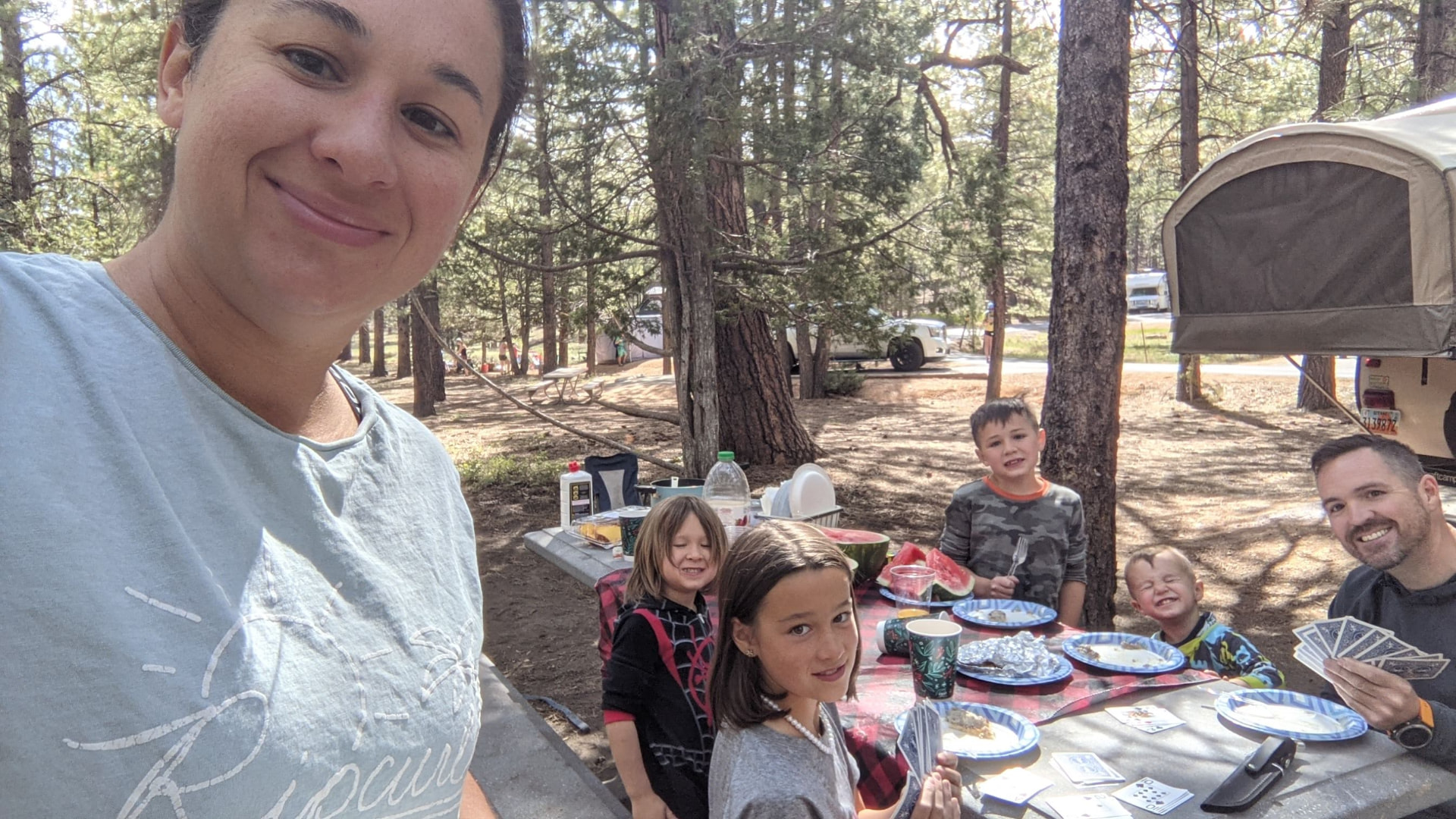
How I Pack for Yellowstone With Kids
After enough Yellowstone trips with four kids, I stopped trying to pack less. I started packing differently.
Where to Stay in Yellowstone With Kids
Inside the park versus the gateway towns, and who each one suits.
Yellowstone With Kids: Start Here
How we'd plan a first Yellowstone trip today: how many days, which entrance, where to sleep and what to see first.
What to Reserve in Yellowstone (and When)
The handful of bookings worth putting on the calendar early.
Stay in touch
Letters from the road.
Trip notes, packing lists and the things we learned the hard way — sent when there's something genuinely useful to share.
No spam. Unsubscribe any time.