Yellowstone in Winter: What to Pack So Nobody Is Cold & Cranky
Leah Cooper · October 7, 2026
Winter Yellowstone is one of my favorite versions of Yellowstone — but it is also one of those trips where what you pack can change the entire day.
When you're standing outside watching wildlife or waiting near a geyser basin, there isn't much difference between 15 minutes and an hour if everyone is warm.
If somebody's toes are freezing, though, the whole family knows about it.
We've visited Yellowstone across the seasons, and winter has taught me that you don't necessarily need more gear. You need the right gear — especially when you're traveling with kids. This is our Yellowstone winter packing list, the one I'd hand a friend.
Start With Layers
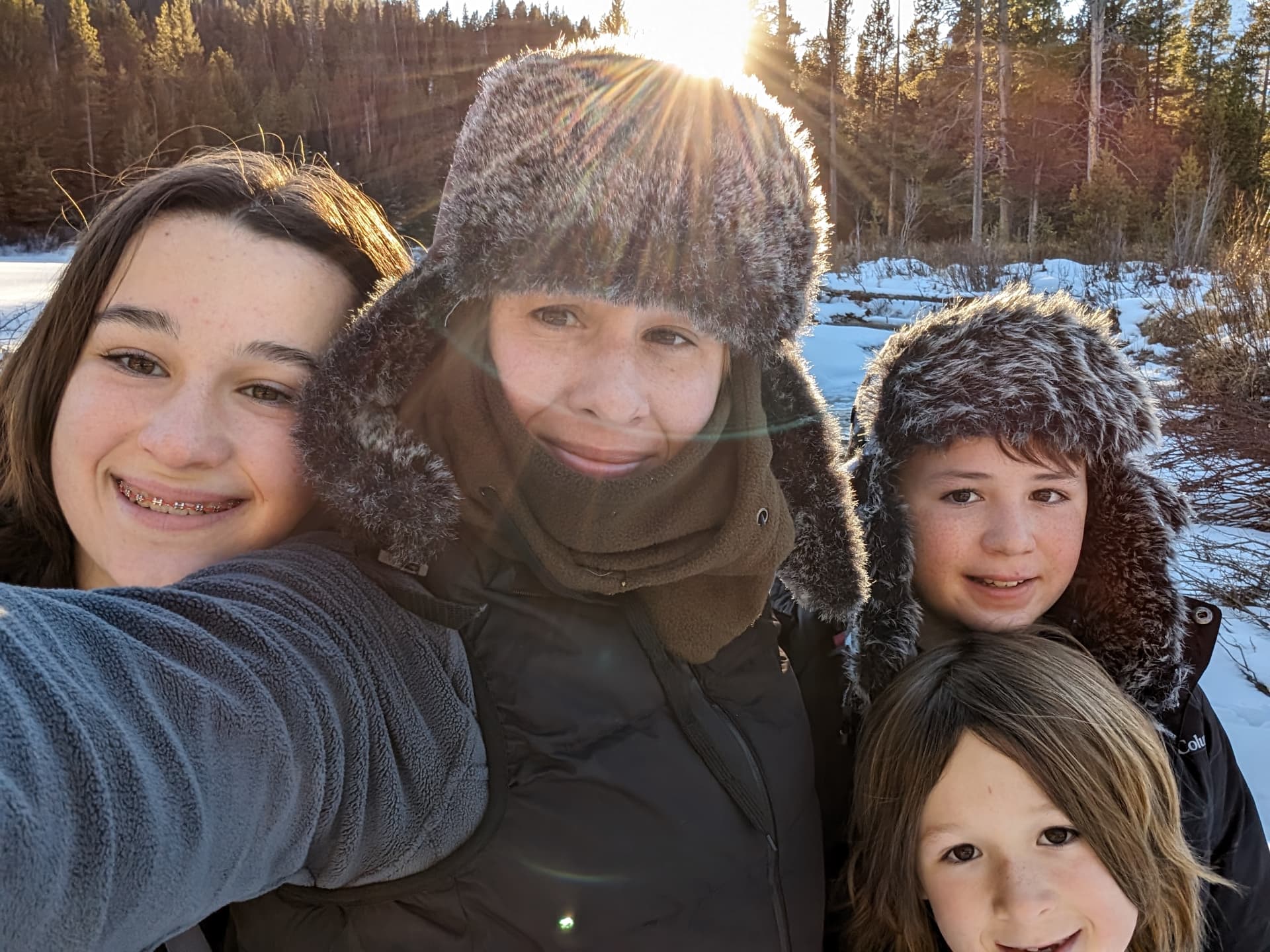
Layers matter more than one enormous coat. You'll go from a heated car to a frozen overlook and back again a dozen times a day, and layers let everyone adjust.
- Thermal base layer, top and bottom
- Fleece or insulated mid-layer
- Waterproof, insulated outer jacket
- Snow pants or insulated pants
- Wool or synthetic warm socks
- Beanie
- Waterproof gloves or mittens
- Neck gaiter
If I had to boil it down: protect the heads, hands and toes. Once those get cold, kids are done much faster than you'd think — and honestly, so am I.
Don't Underestimate Your Boots
Insulated, waterproof boots and warm socks are the single biggest upgrade for winter Yellowstone. You spend far more time standing still than you expect — watching wildlife, waiting for a geyser, stopping at an overlook — and that's when cold feet creep in.
When boardwalks and trails are icy, a pair of traction devices or ice cleats that slip over your boots is worth having in the car.
What Goes in Our Day Bag
Cold drains camera and phone batteries faster, so keep spare batteries or devices somewhere warm — an inside pocket works — whenever you can.
Binoculars or a spotting scope are especially worth it here because wildlife may be far from the road. Some of our favorite Yellowstone moments came from simply pulling over and watching.
The Kid Stuff That Actually Helps
- Extra gloves
- Extra socks
- Snacks (more than you think)
- Hand warmers
- Something small for downtime
- A cozy layer or blanket in the vehicle
- Hot chocolate packets, if your lodging or day plans allow
Keeping kids happy outside often has less to do with specialized equipment and more to do with dry gloves and enough snacks. The spare pair of gloves has saved more of our winter days than anything I've bought.
A Few Things I'm Always Glad We Brought
- Binoculars or a spotting scope
- A camera
- An insulated seat cover or blanket for longer wildlife stops
- A thermos for something warm
- Lip and face moisturizer — Yellowstone winter air is extremely dry
We love wildlife watching, and we've learned not to rush every stop. If you want better photos, renting a camera or a longer lens for the trip can be worth it rather than buying expensive gear you'll use once a year.
For where to stay, how to get around and what winter in the park is really like, see Yellowstone in Winter With Kids. For our year-round packing approach, read How I Pack for Yellowstone With Kids.
One Last Thing
The goal isn't to bring your entire house with you.
It's to be warm enough that when someone spots an animal across the valley, or steam starts rising through the trees, nobody is begging to get back in the car.
Pack for the cold.
Then give yourself enough time to stand there and watch.